
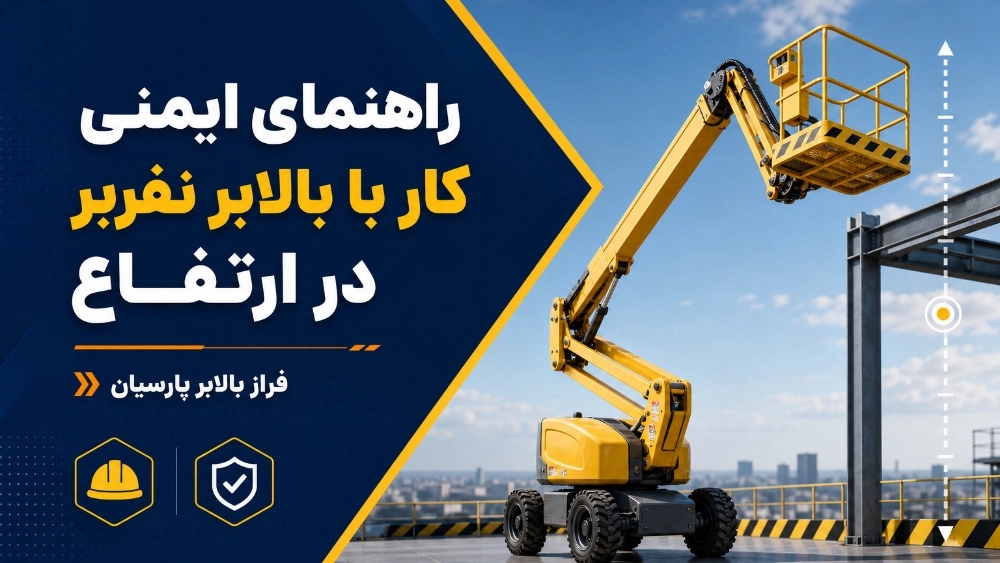
What is a lift and what is its use?
The importance of observing the safety of working with a lift at height
Choosing the right lift for the project
Elevator operator training
Inspection of the lift before starting work
- Hydraulic oil leakage check, fuel or other liquids
- Check tires, wheels and connections
- Check pins, screws and arm components
- Test brake and emergency stop system
- Check steering keys in basket and ground panel
- Check fences, basket entrance and locks
- Check horn, alarm, lights and sensors
- checking the battery, cables and device charging
- testing the emergency landing system
- checking the capacity plate and warning signs
Assessing the environment before installing the lift
Attention to the permitted capacity of the lifting basket
Use of personal protective equipment
Risk of electrocution and keeping distance from power lines
Using the lift in adverse weather conditions
Correct placement of balance jacks
Prohibition of exiting the basket at height
Lifting movement in the basket up state
Prevent tools and equipment from falling
Planning for emergencies
Periodic elevator maintenance
Common mistakes when working with a forklift
- Using the lift by an untrained operator
- Exceeding the permitted capacity of the basket
- Setting up on loose or sloping ground
- Working in strong wind and bad weather
- Getting close to power lines
- Putting a ladder inside the basket
- Opening the basket while working
- Ignoring alarms and Sensors
- Moving the machine without checking the path
- Using a faulty lift
- Exiting the basket at a height
- Making non-essential changes on the machine
- Putting the tool on the fence
- Working without an emergency rescue plan
Elevator safety checklist
- Is the lift model appropriate for the type of project?
- Is the capacity of the machine proportionate to the number of people and the weight of the tools?
- Has the operator received the necessary training?
- Has a daily inspection been carried out?
- Is the ground surface stable, level and hazard-free?
- Are the jacks properly positioned?
- Are the operating ranges marked? Is it?
- Is a safe distance from power lines maintained?
- Are wind and weather conditions suitable?
- Is personal protective equipment in good condition?
- Are instruments in the correct location?
- Is the person responsible for ground control identified?
- Is there an emergency response plan?
- Has the emergency stop and landing system been tested?