
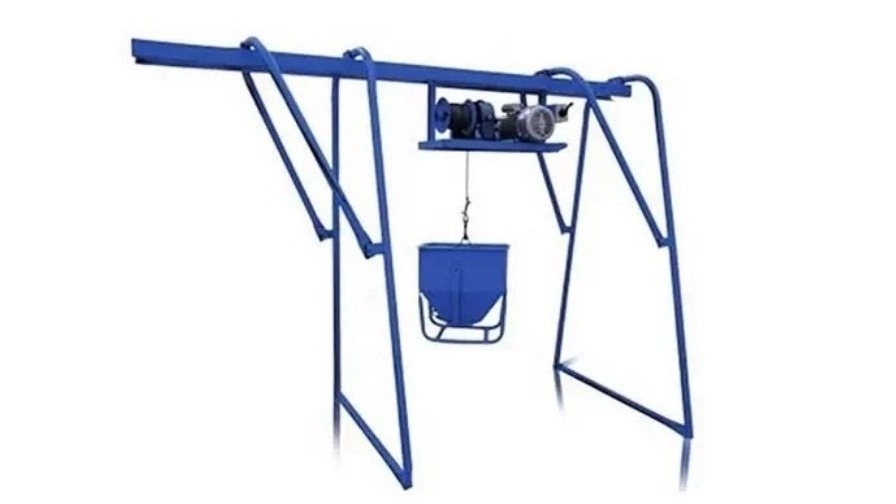
1- Lift Hook (Lifting Hook)
The lifting hook must be equipped with a latch or a shackle so that the load does not accidentally come off during work.
2- Limit Switch
The presence of a limit switch in the construction lifting hook limits the height of the hook and prevents the lifting hook from being wrapped around the winch.

3- Balast Boxes (BAPALAST BOXES)
The balance weight should be a part of the lift. Inside these boxes, which are tied to the rear legs of the lift, heavy materials are poured to ensure the static balance of the lift during the load transfer. Thermal (minimum grade 8) created this stability.
4- Safety Bars
To prevent the operator from falling from the space between the two front legs of the lift, protective barriers are installed on said legs. There is a distance between the two protective barriers so that the steel cable and hook can pass through this distance. Of course, the use of a fall restraint system is recommended for the lift operator.
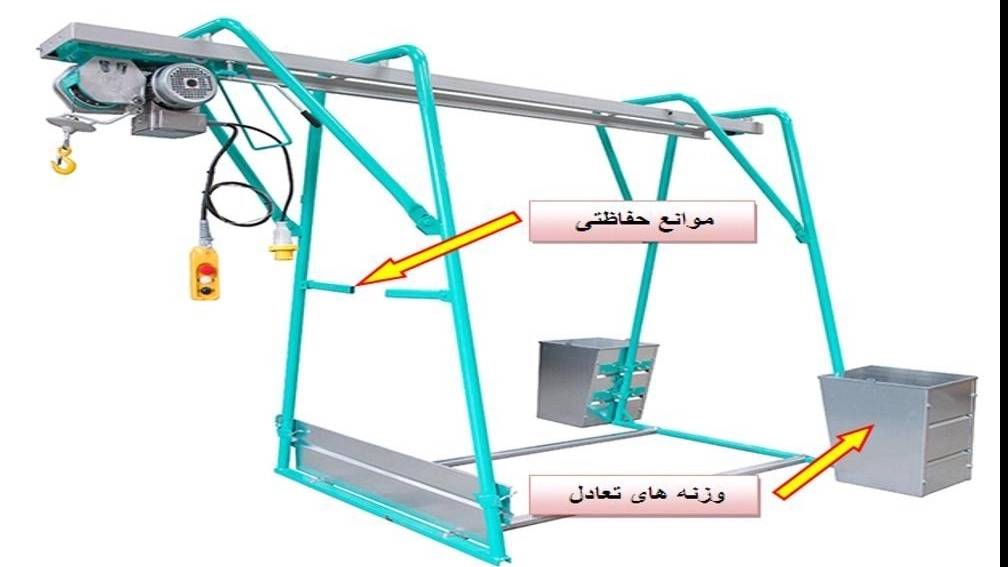
5- Toe Board
In order to prevent construction materials from falling from the space between the front legs of the lift, footrests are installed between the front legs of the lift.